 BRITTANY LINKS - HOME - OUR BRITTANYS - OUR HISTORY - BRITTANY PUPPIES - PLANNED BREEDINGS - MT WAR ON WEEDS - BIRD HUNTING - AKC FIELD TRIALS - AGILITY - AKC CONFORMATION SHOWS - HAPPY HUNTERS/FAMILY - MONTANA BRITTANY CLUB - AKC HUNT TESTS
|
||||
| Pups in order of birth: 1. Rush, male 2. Tansy, female 3. Knapper, male 4. Daisy, female 5. Star, female 6. Topper, male 7. Blue, male 8. Flax, male 9. Iris, female 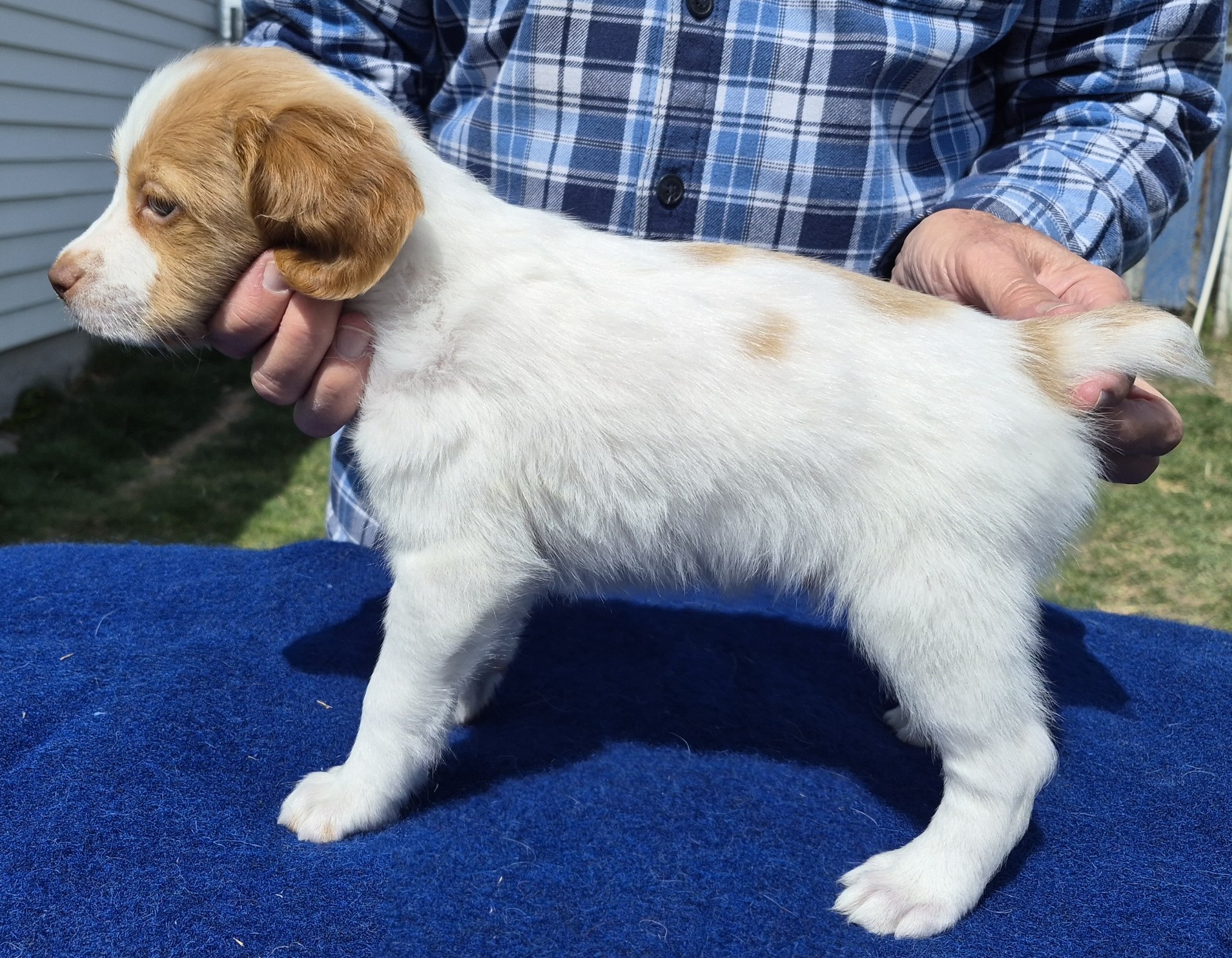 |
rush
skeletonweed (Chondrilla juncea) Montana: PRIORITY 1B These weeds have limited presence in Montana. Management criteria will require eradication or containment and education. 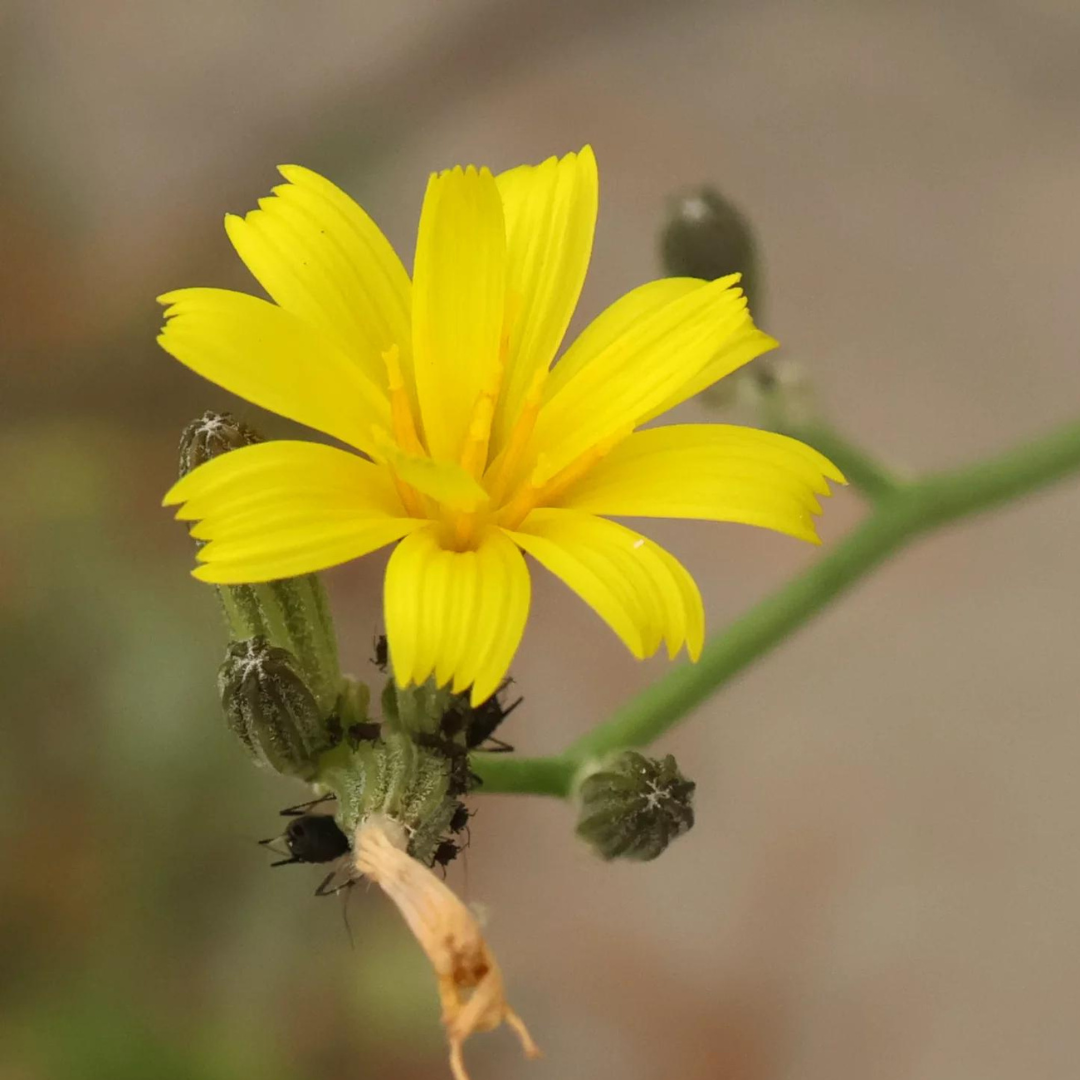 Photo from Teton County Weed and Pest News Rush skeletonweed is
a non-native, invasive terrestrial
forb listed as noxious, prohibited,
or banned in nine western states.
Rush skeletonweed originated from
the Transcaspian region of Eurasia,
its native range extending from
Western Europe and northern Africa
to central Asia. It has become
widespread in wheat growing regions
and rangelands of Idaho, Oregon, and
Washington. It is considered an
early seral species invading
disturbed areas in crop, pasture,
range and forest lands. It may also
invade intact plant communities in
low rainfall areas such as
southwestern Idaho. Three biological
control agents have been released to
manage rush skeletonweed but they
have been successful only in certain
locations. The skeletonweed root
moth, Bradyrrhoa gilveolella, was
introduced in Idaho in 2002 but
establishment has not been confirmed
by 2009. The rush skeletonweed gall
midge, Cystiphora schmidti, was
first released in California in 1975
and is available for Prepared By:
mass collection in California,
Idaho, and Oregon. It damages
rosettes and flowering stems
reducing seed production. The rush
skeletonweed rust fungus, Puccinia
chondrillina, is the first exotic
plant pathogen to succeed as a
classical biological control agent
in North America by reducing rush
skeletonweed to “tolerable levels.”
It is readily available for
redistribution in California, Idaho,
Oregon, and Washington. The
effectiveness of biocontrol agents
vary depending on local conditions
and plant genotype. The rust appears
more effective in California and the
mite appears to be more important in
eastern Washington. From: USDA
NRCS
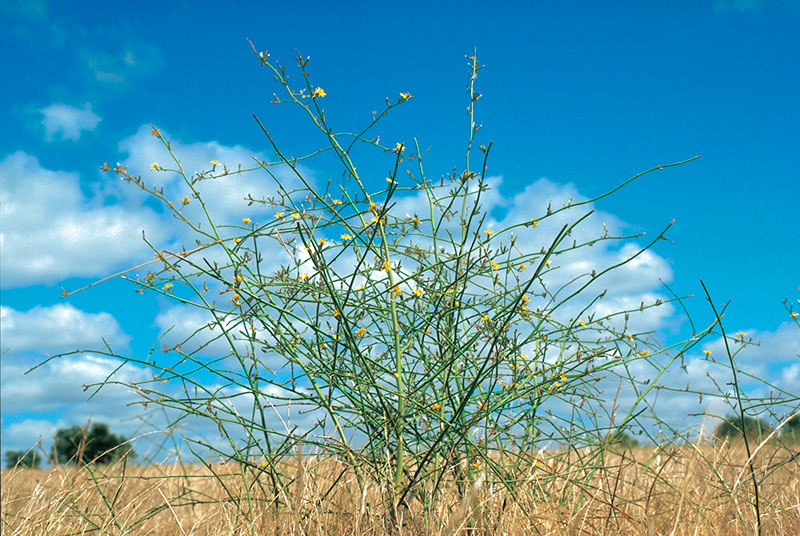 Photo from: Integrated Pest Management |
|||
| BRITTANY PUPPIES Past Litters Back to Montana Noxious Weeds Litter 2026 | ||||
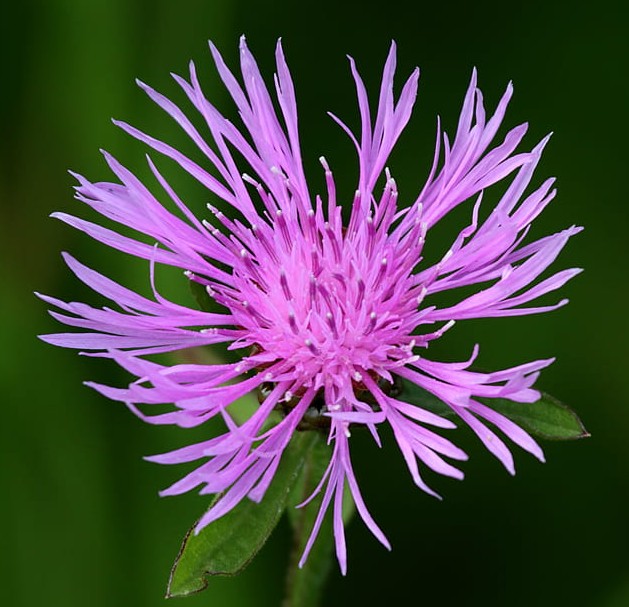
| Week 7, 4-25-28,
Volhard puppy test. Deposit
holders pick in order. Pups
can go home at week 8 (to be
discussed because I am chairperson
of a field trial and hunt test near
Billings May 1-3). |
||
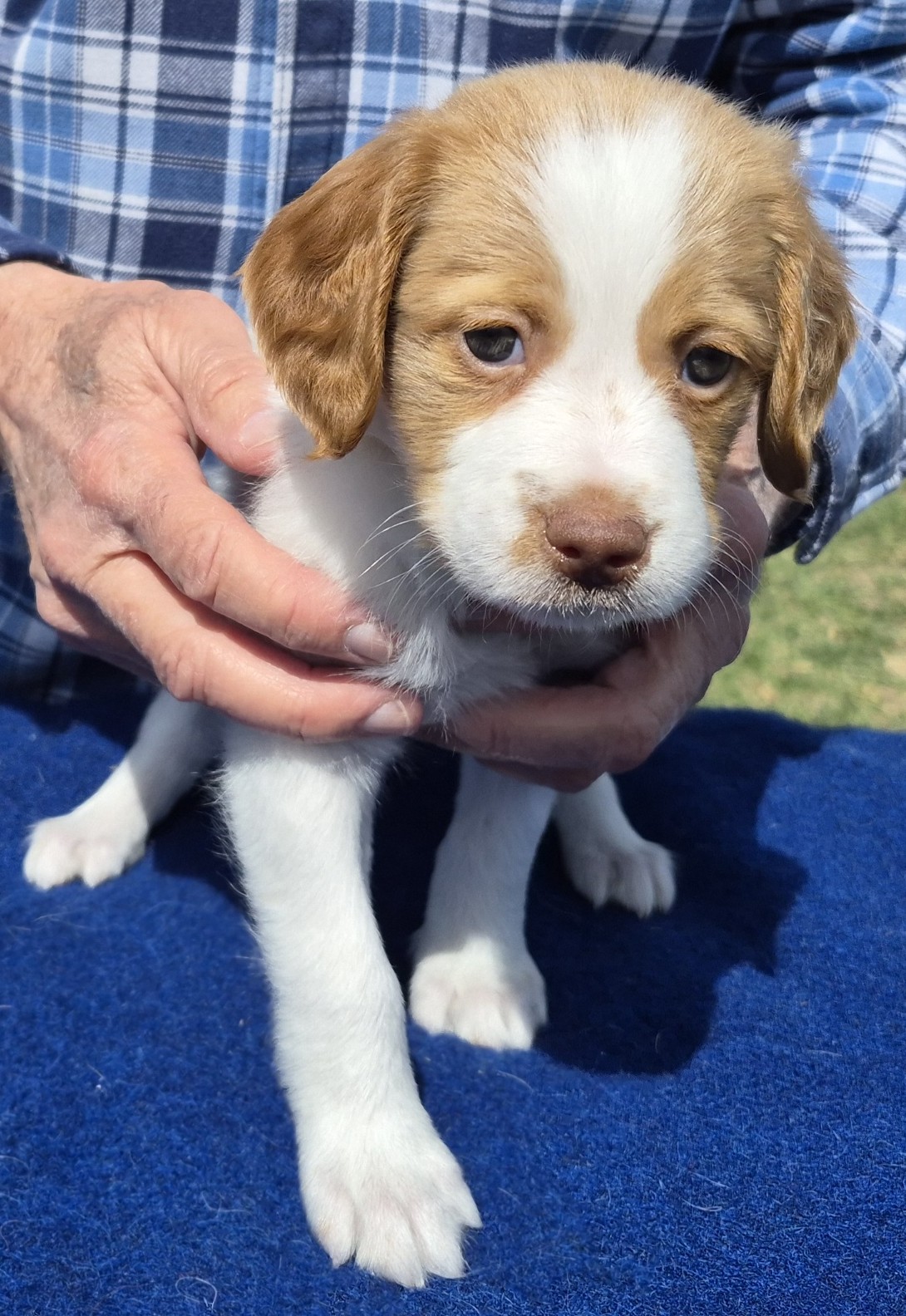
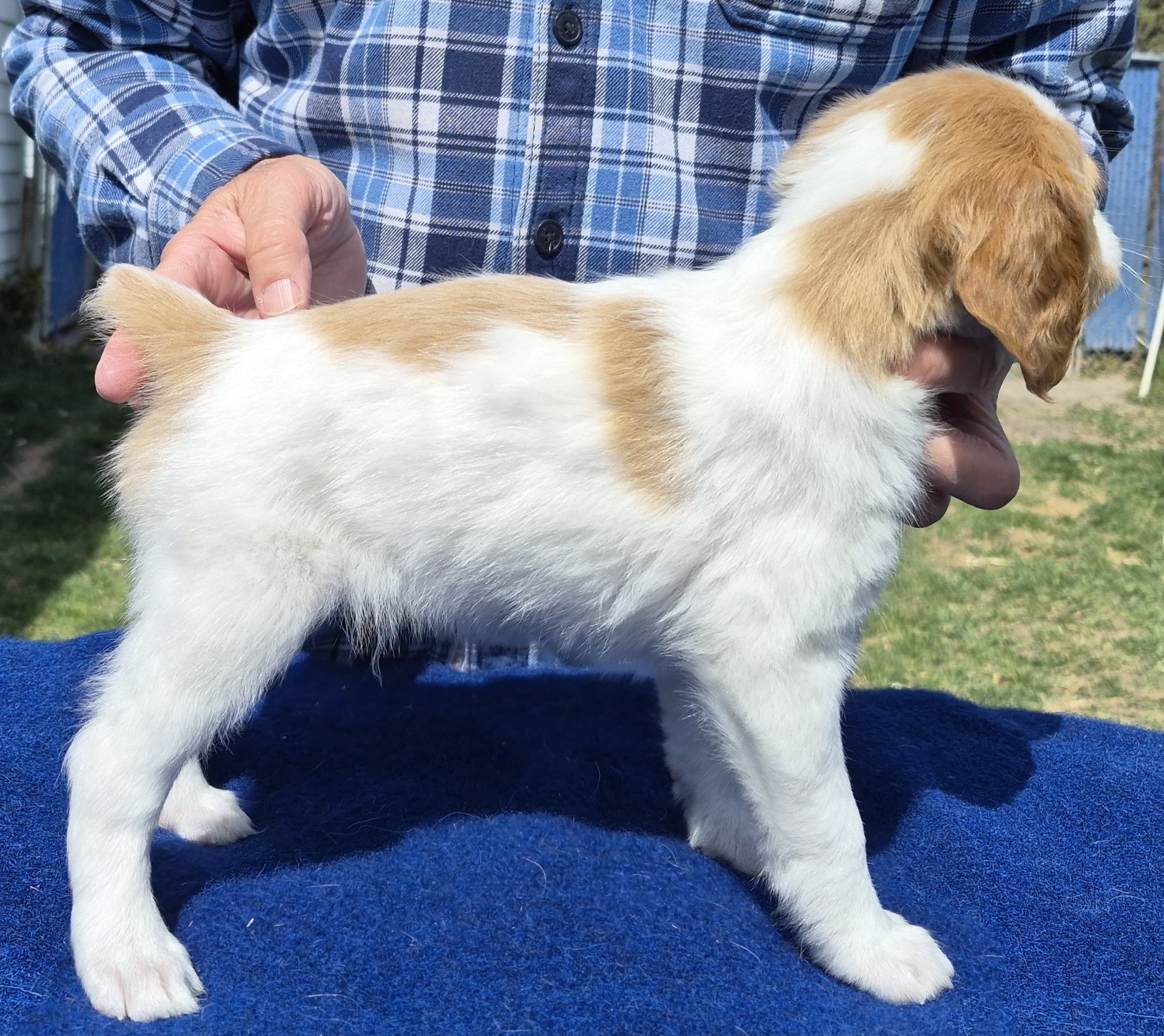
| Week 6,
4-18-26, 2,178g. |
||
 |
 |
|
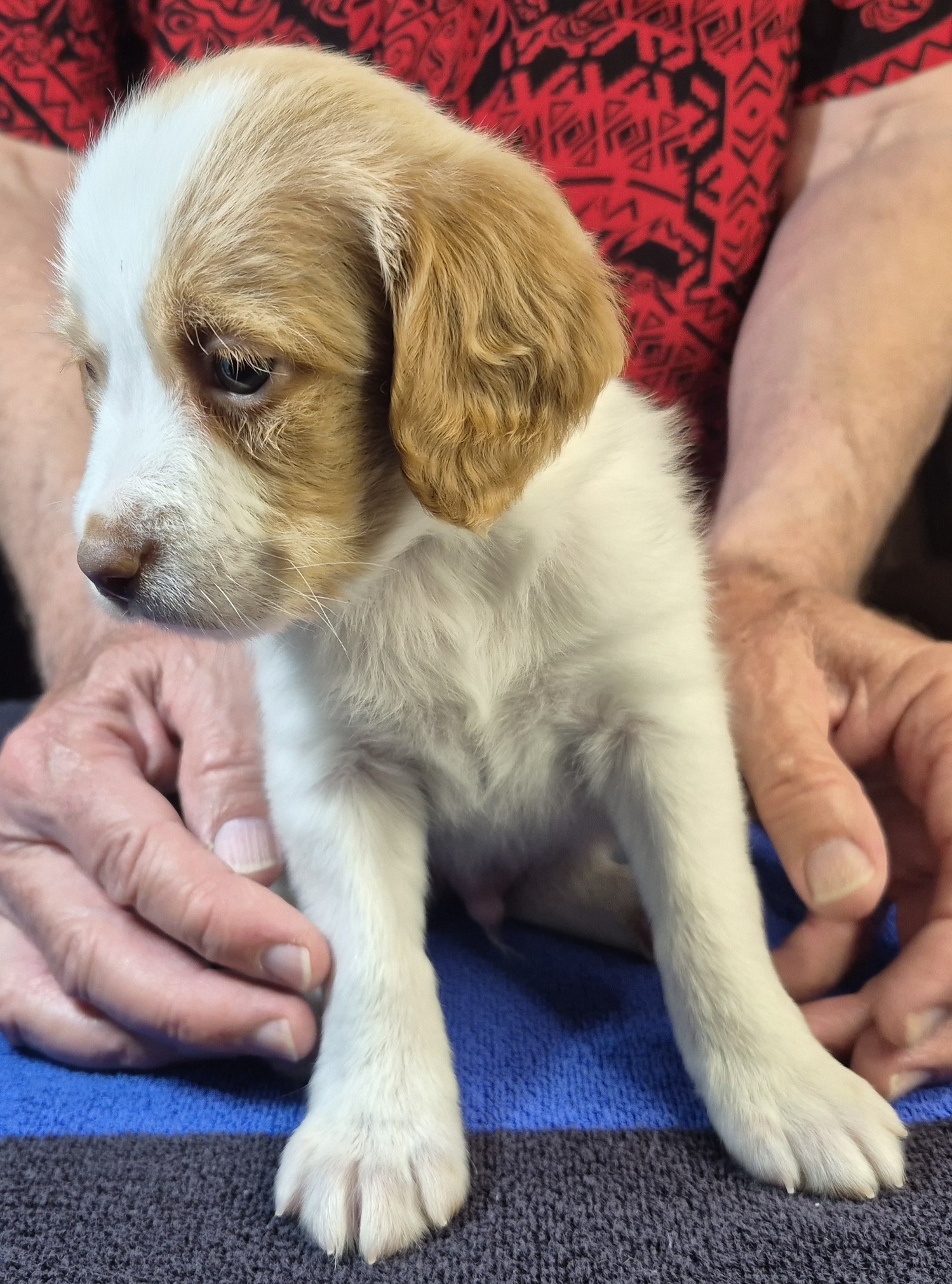
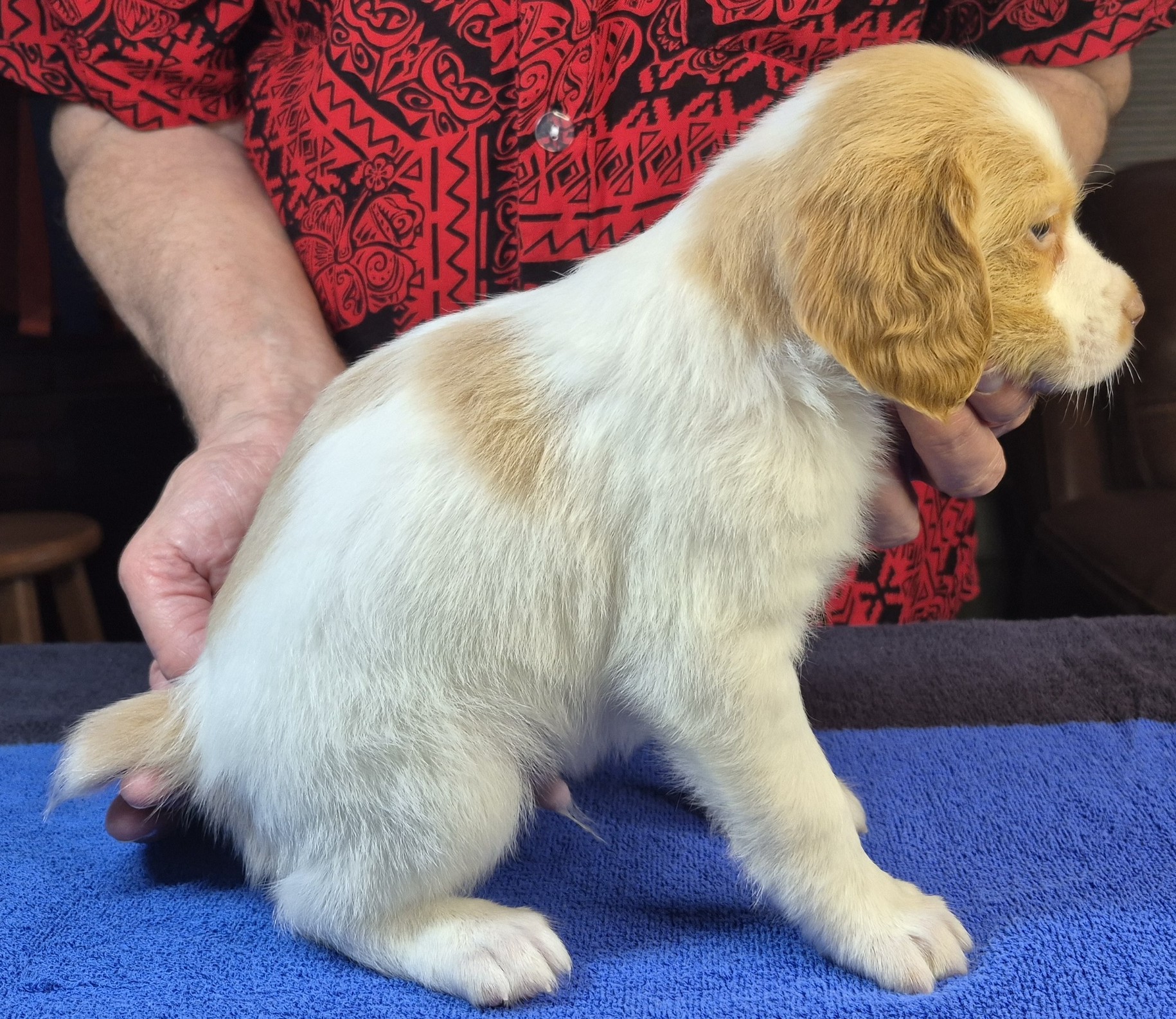
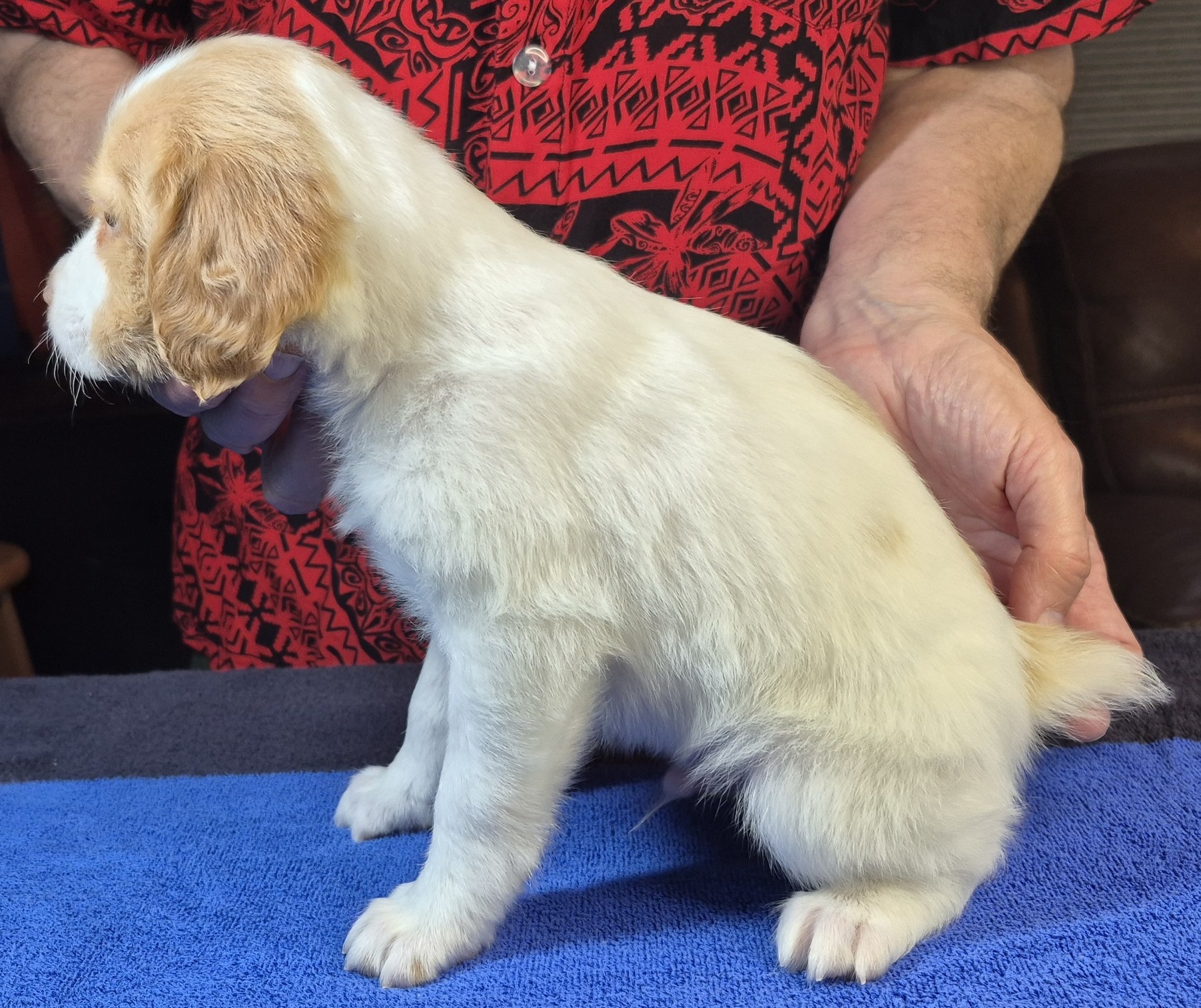
| Week 5,
4-11-26,
1,526g. Some of the pups
wanted to sit, some to stack.
They are still arching their backs
when they do not want to be
stacked. They are gaining
weight well now that they are eating
blended and soaked puppy chow.
They are lots of fun! Now is a
good time to visit them!! |
||
 |
 |
 |
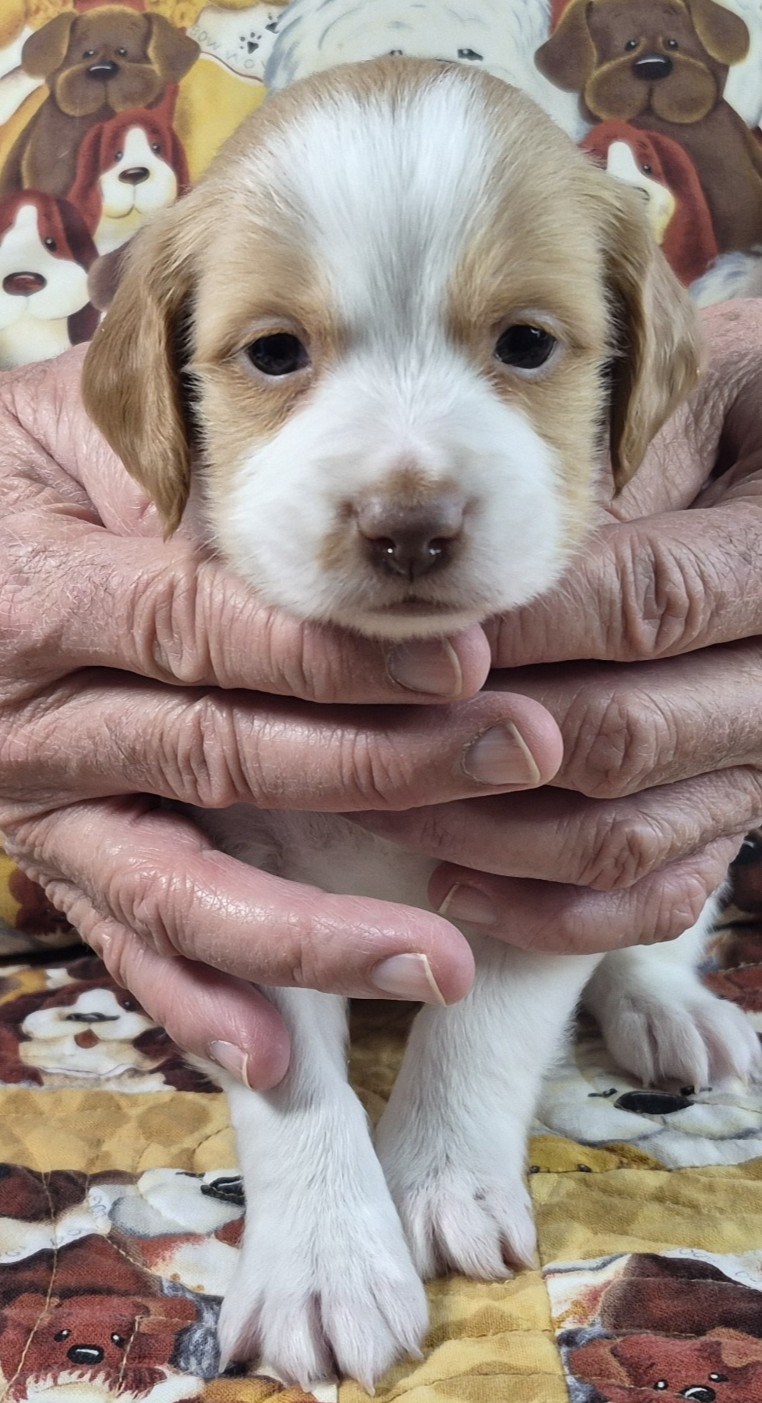
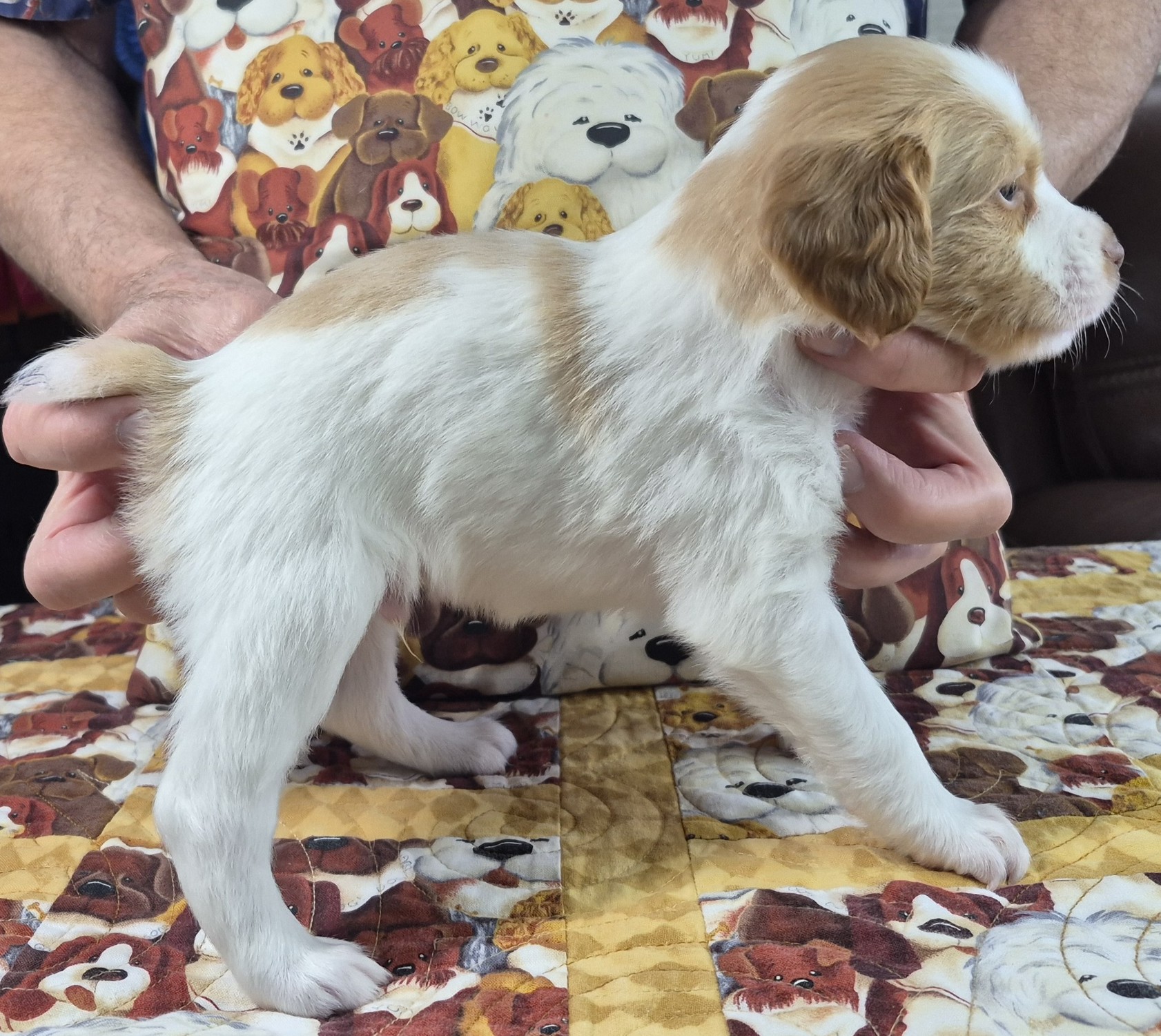
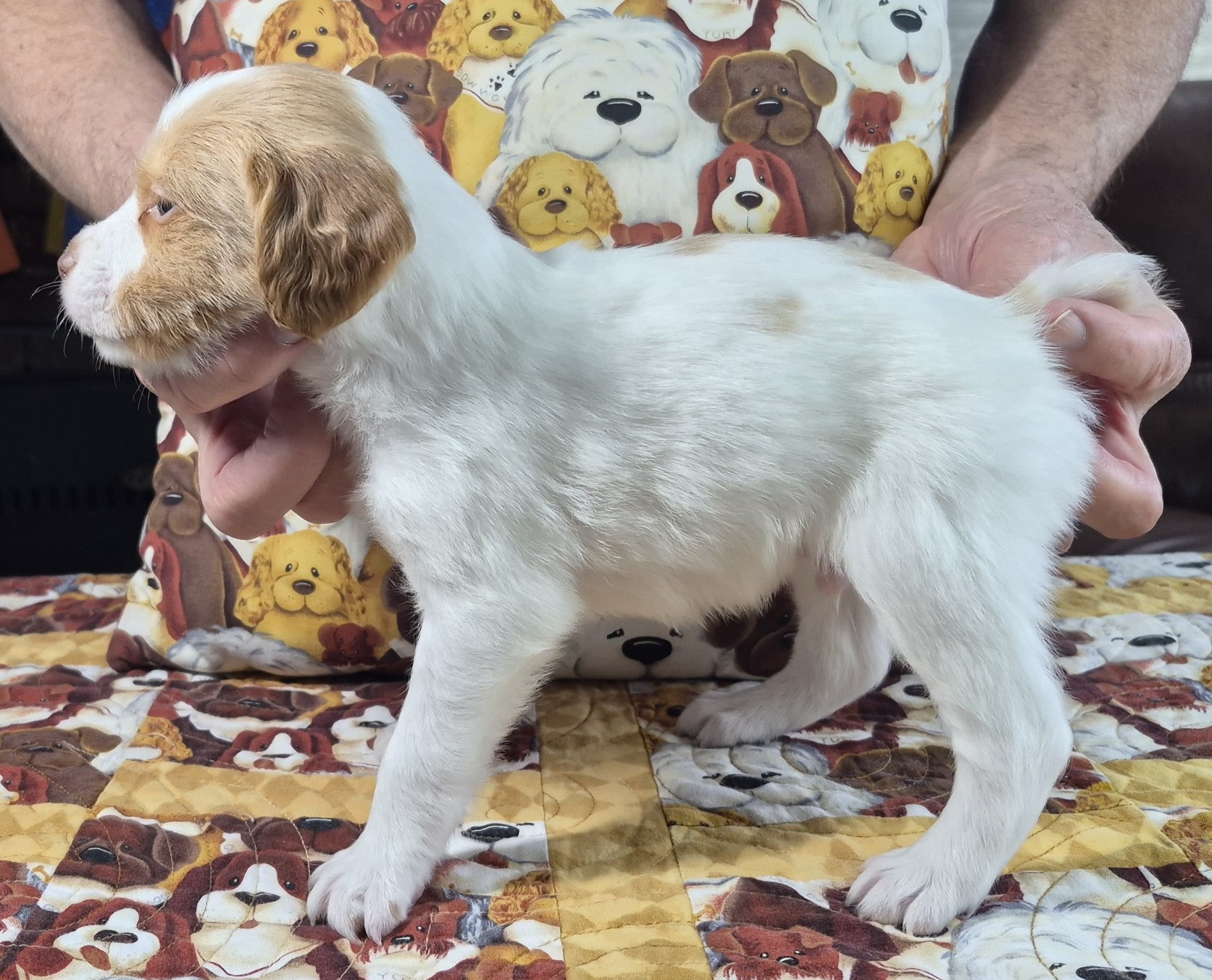
| Week
4, 4-4-26,
985g. The pups are still too
young to stand with a straight top
line (back) and tend to arch their
backs. |
||
 |
 |
 |
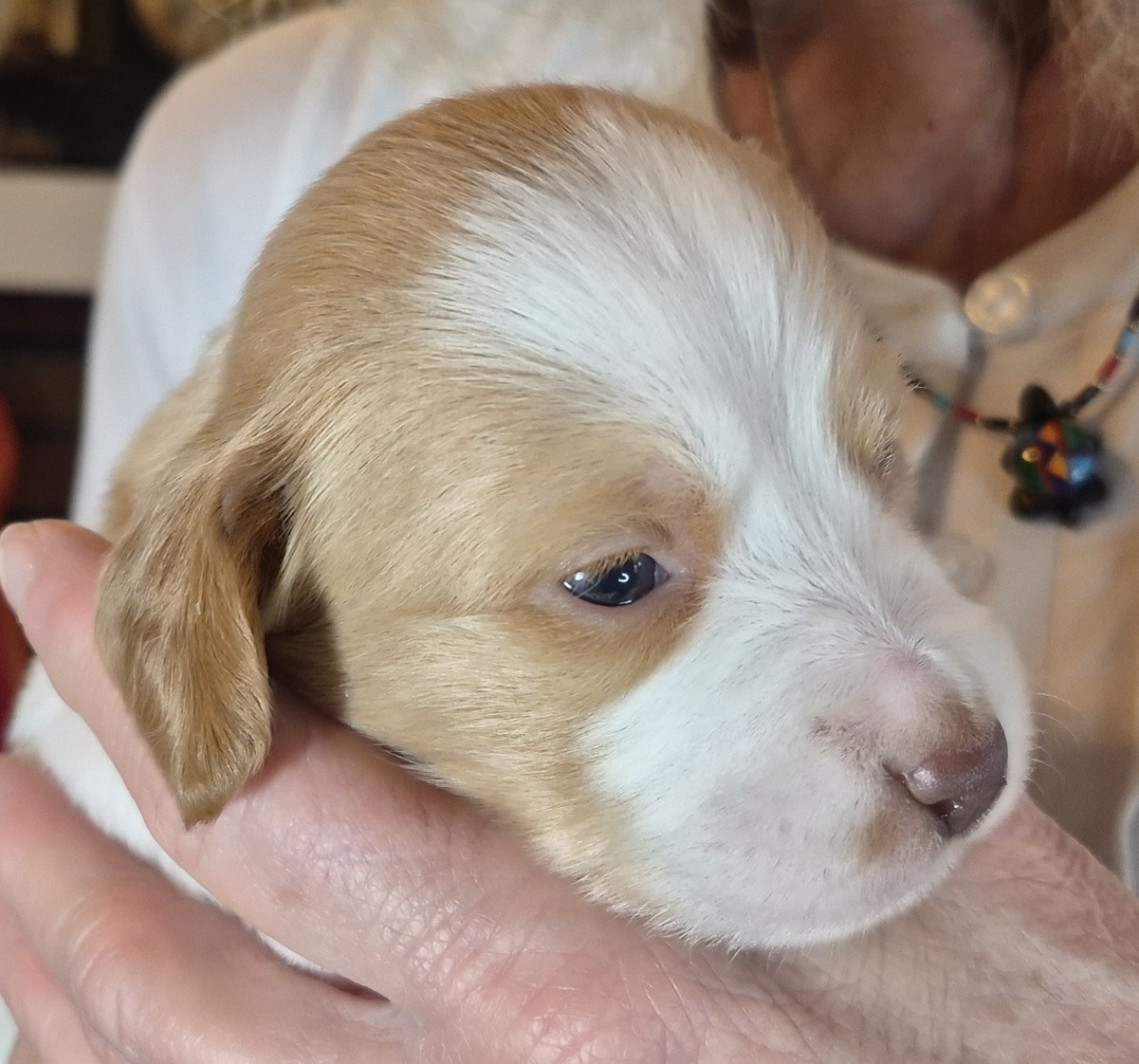
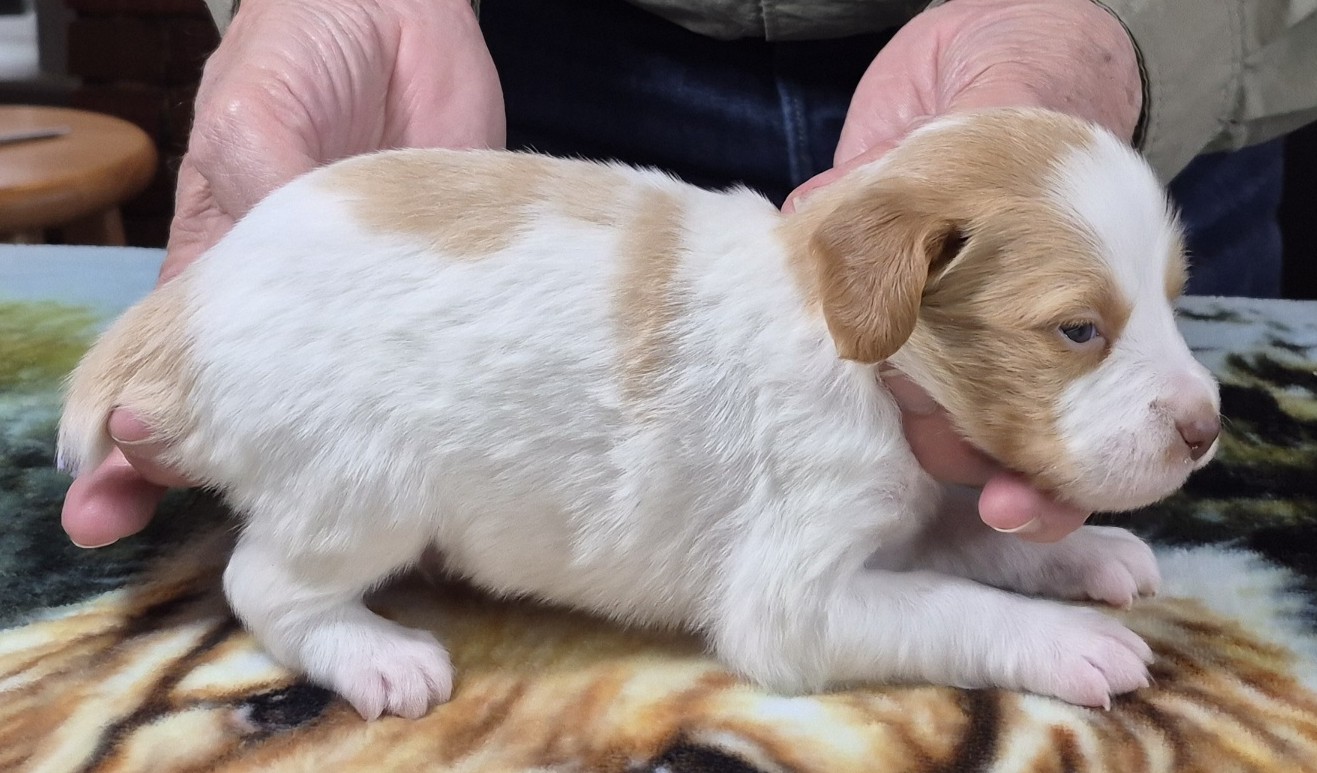
| Week 3,
3-28-26, 762g. The
pups are just starting to walk
around and play a bit. |
||
 |
 |
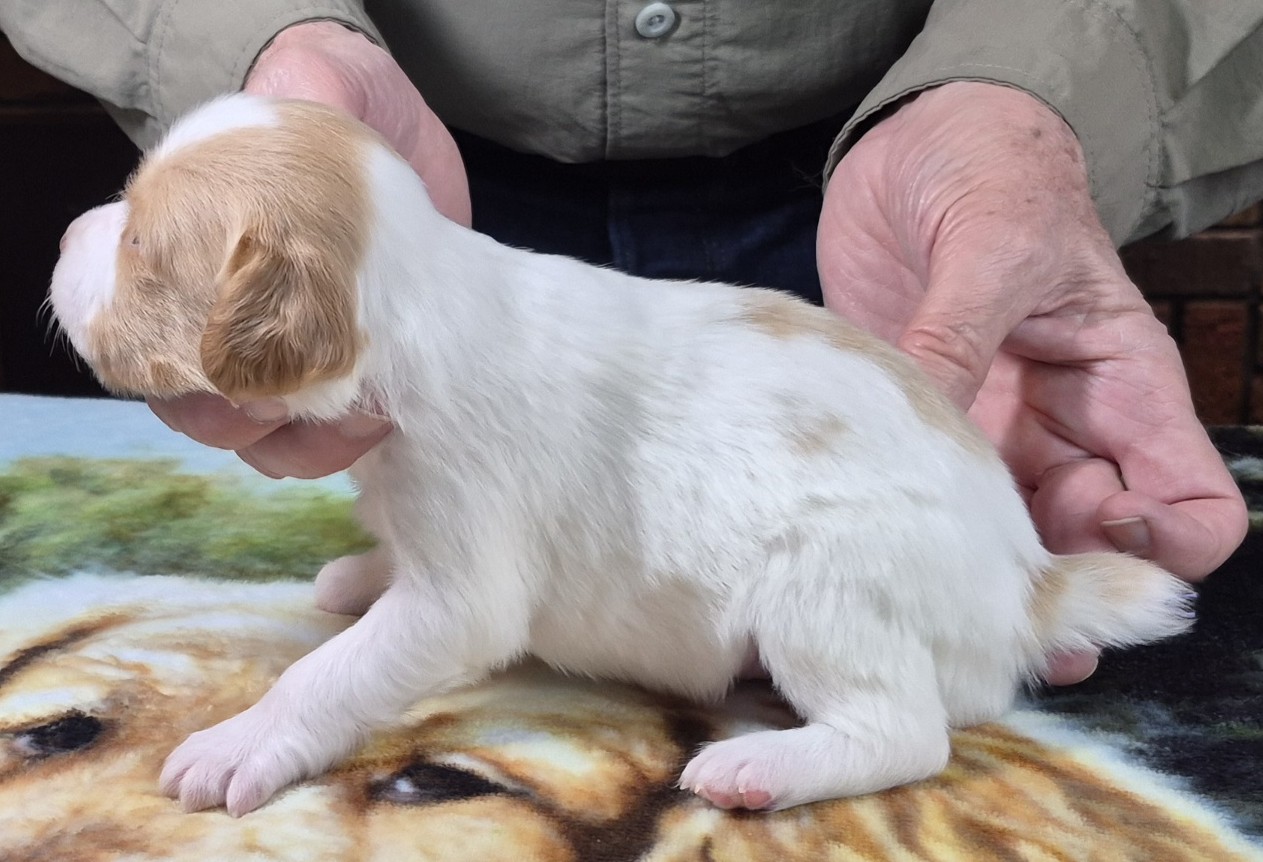 |
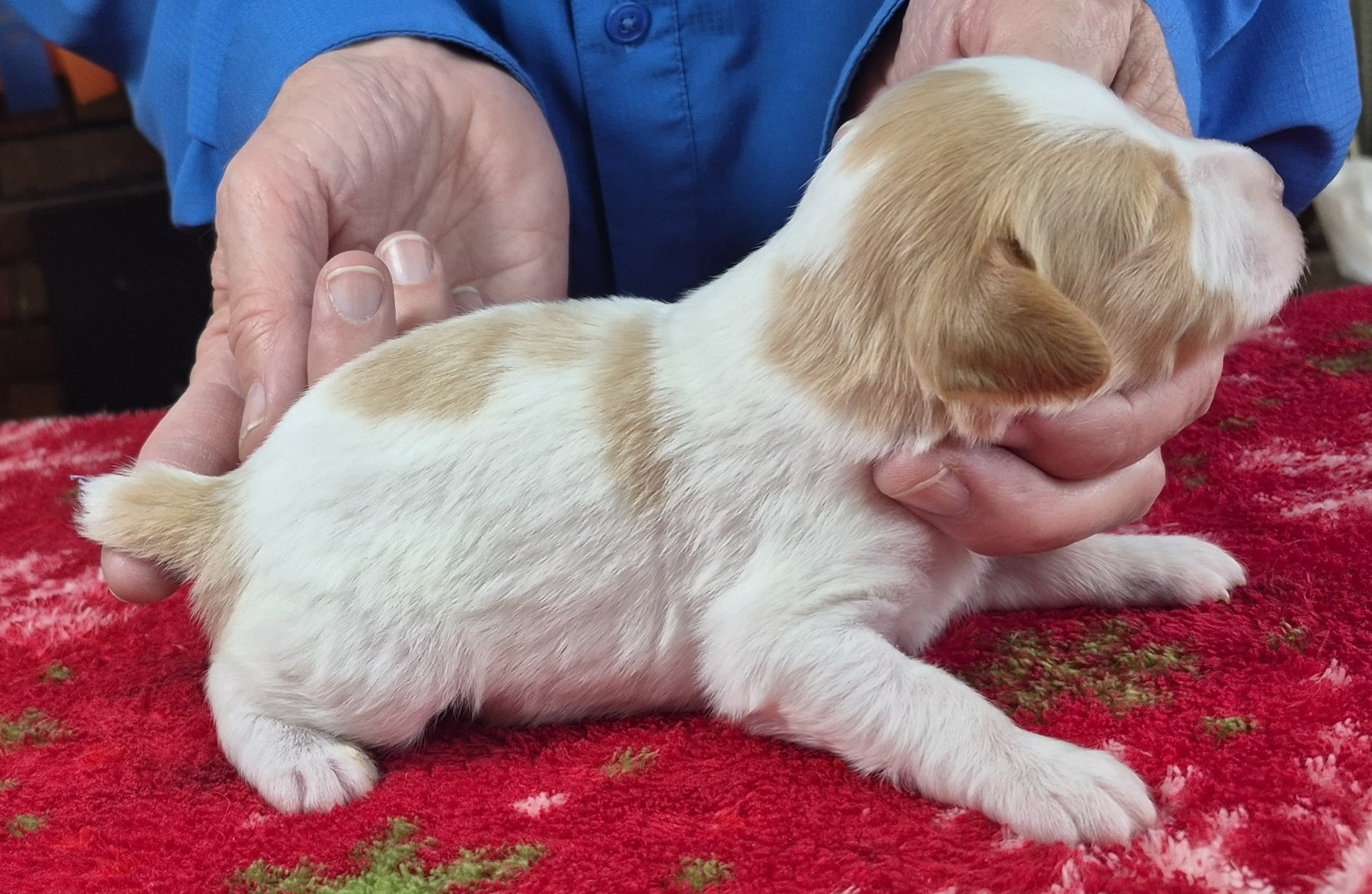
| Week 2,
3-21-26, 557g.
Pup pups are gaining weight well,
and are very strong and active! |
||
 |
 |
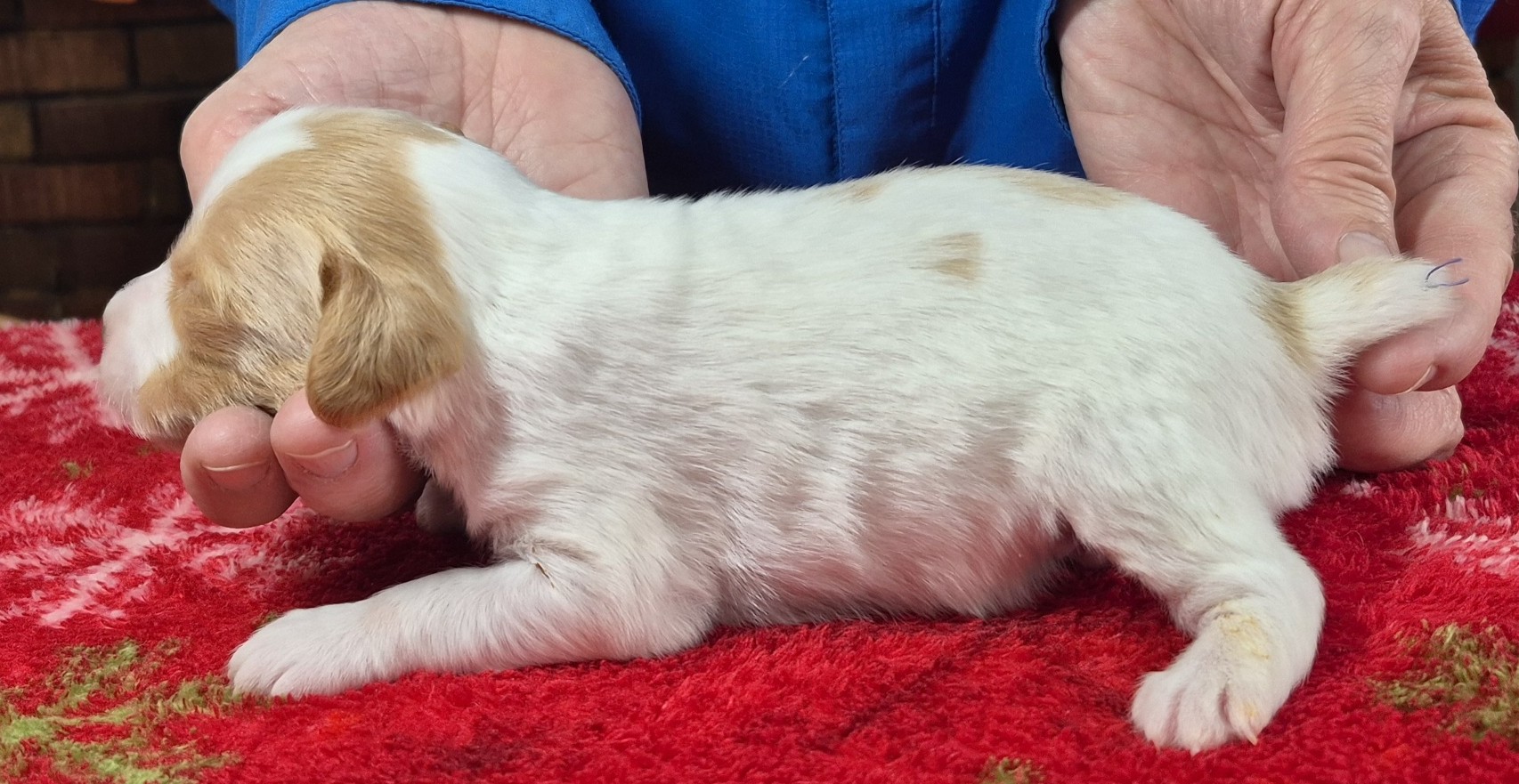 |
| Week 1,
3-14-26,
283g. He started out small but
is gaining weight well! The
pups eyes are still closed and their
spots are slowly darkening as
white/orange Brittany pups do. |
||
 |
 |
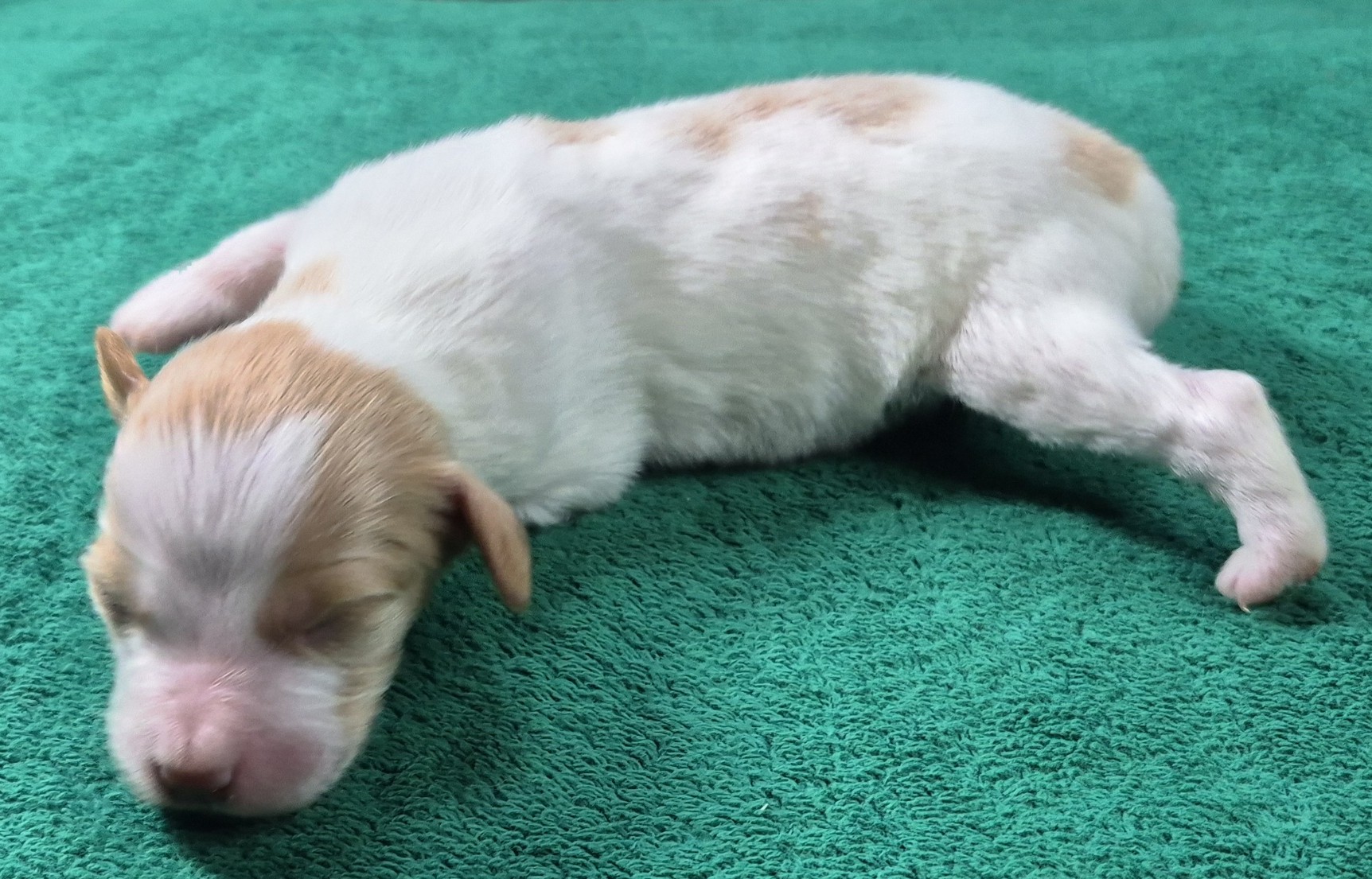 |
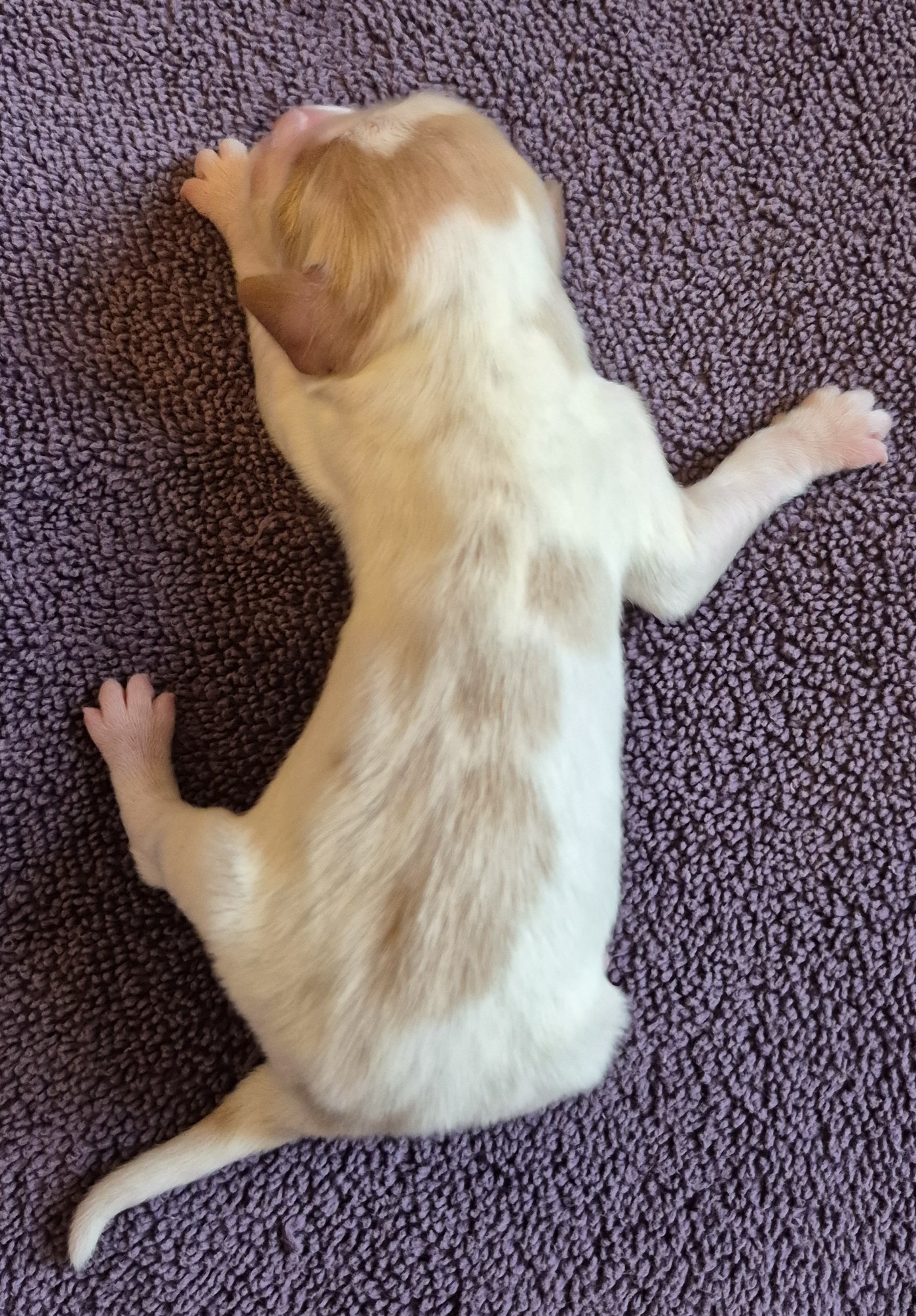
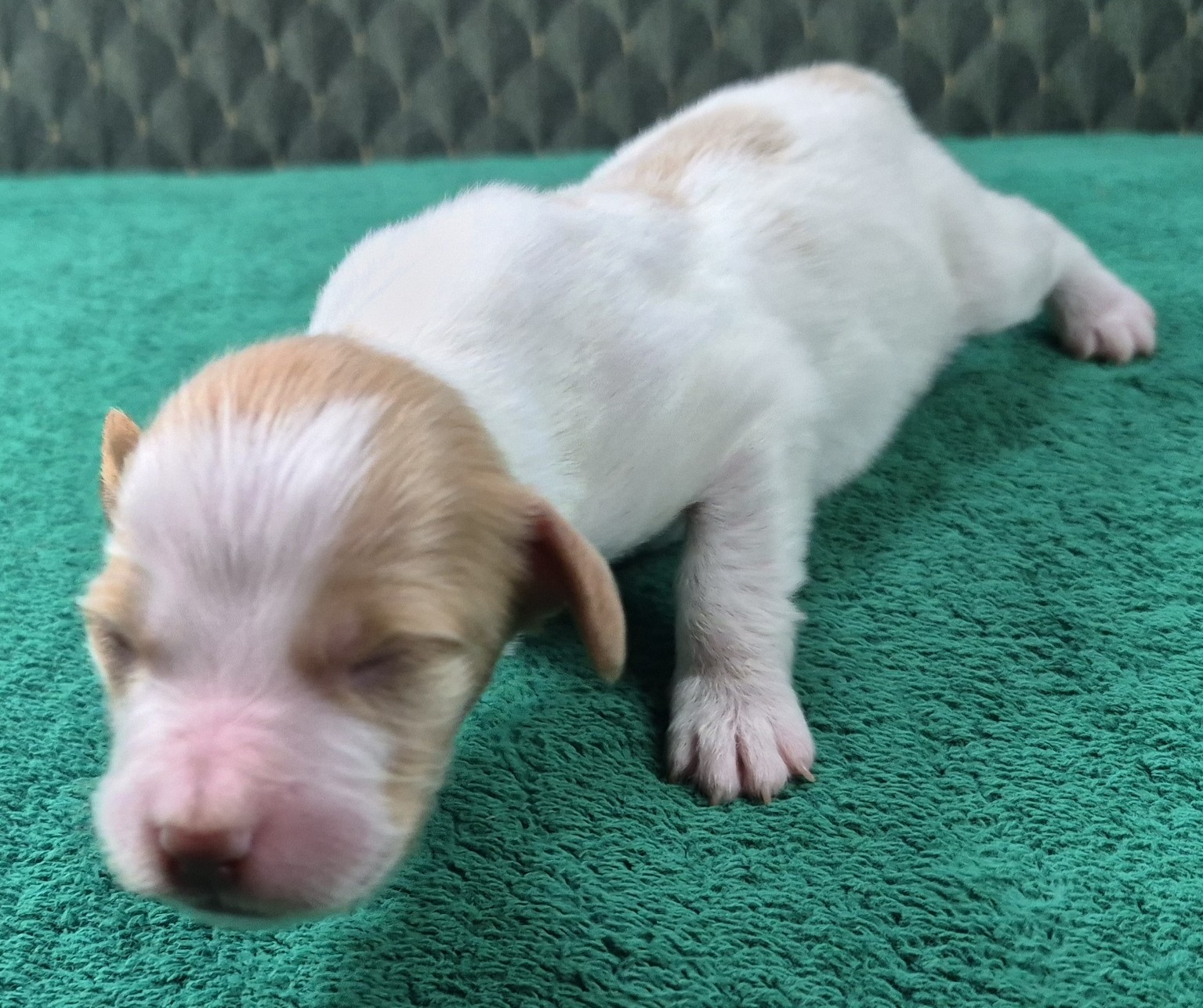
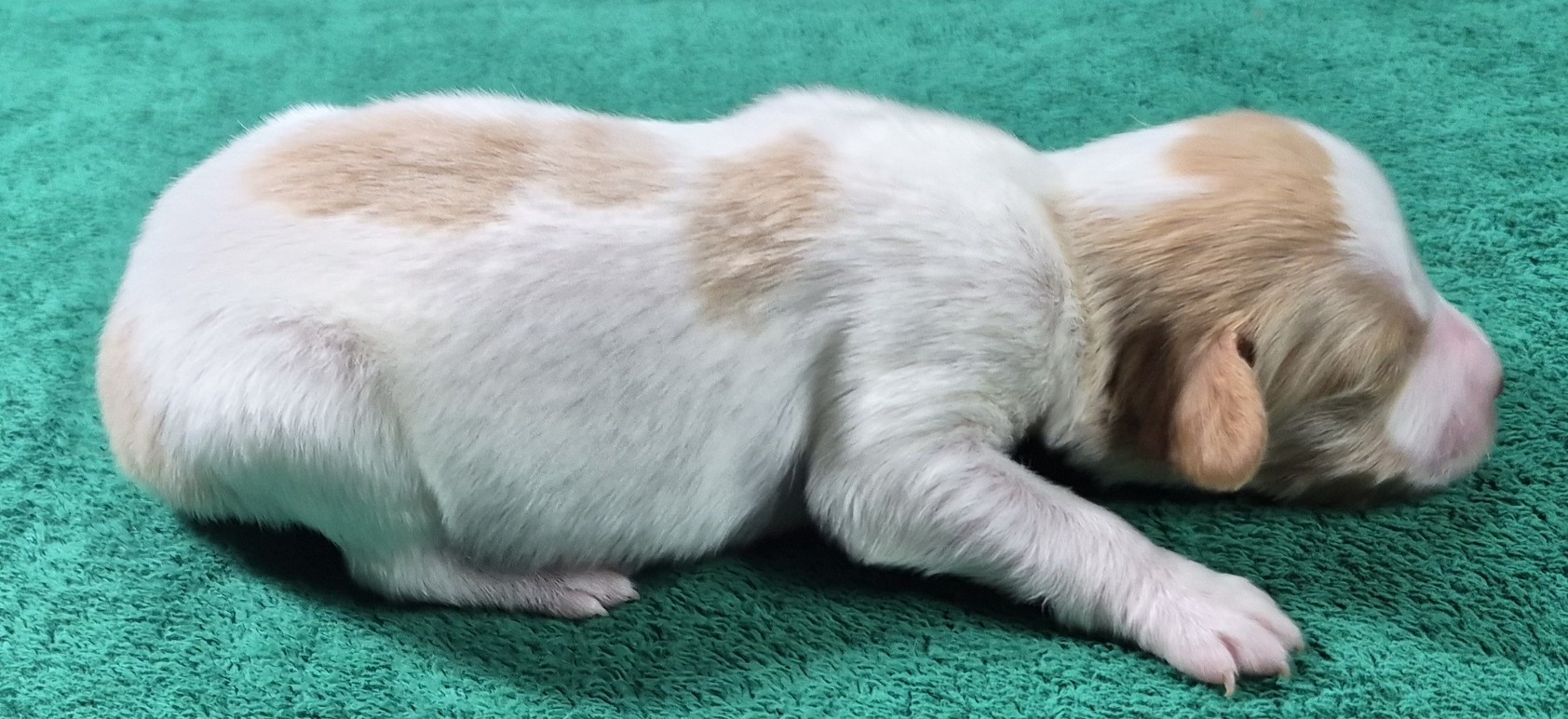
Male. Birth weight: 194g, Three spots on middle of back. |
||
Warbonnet Brittanys Puppy Contract - Choosing A Brittany - Breeders Code Of Ethics - I Want A Brittany - Responsible Breeders - Breed Standard - American Brittany Rescue - A Responsible Breeder Should Brittanys have not been called "Brittany Spaniel" since the 1980's. |
||